
 EN
EN
Why 358 Security Fence Is the Industry Standard for High-Threat Industrial Sites
Rising Physical Security Threats at Critical Infrastructure and Manufacturing Facilities
Security risks are growing fast for critical infrastructure and manufacturing operations across the country. According to recent data from Ponemon Institute (2023), there was a 27% rise in break-in attempts at places like power stations, oil refineries, and major shipping centers between 2020 and 2023. These incidents cost companies an average of over $740,000 each time they happen. We're seeing state-sponsored groups, criminal organizations, and activist factions all targeting these facilities for different reasons ranging from damaging operations to stealing trade secrets. Regular old chain link fences just don't cut it anymore against modern attack techniques involving heavy cutting equipment or specialized climbing apparatus. When security fails at these locations, businesses not only lose valuable uptime but also risk getting hit with hefty fines for failing to meet industry standards such as ASIS PAP.1 requirements set by the Department of Homeland Security. For areas where security breaches could cause serious problems, facility managers need robust fencing solutions that stop forced entries, remove any surfaces people can climb, and work well alongside surveillance systems. Getting this right means investing in specifications that actually perform under real world conditions instead of relying on outdated approaches.
How 358 Mesh Geometry—3” x 0.5” x 8-gauge—Delivers Proven Anti-Climb, Anti-Cut, and Forced-Entry Resistance
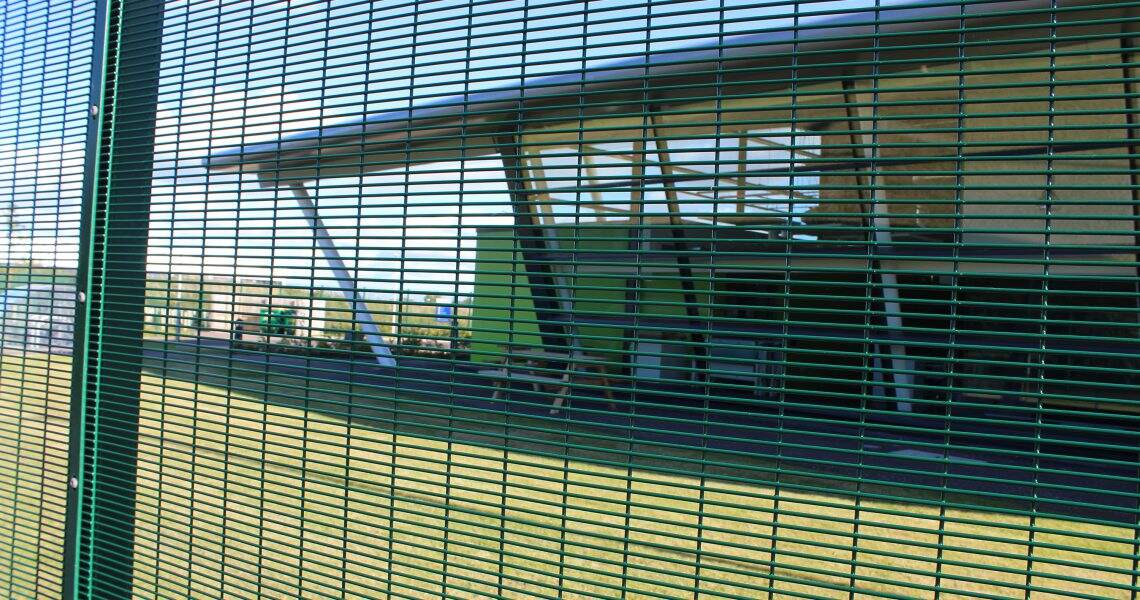
The 358 security fence’s welded mesh design—3-inch longitudinal spans, 0.5-inch vertical apertures, and 8-gauge (4mm) steel wire—creates a multi-layered deterrent validated in real-world and lab-based stress testing. Its geometry delivers three interlocking security functions:
- Anti-climb: Apertures smaller than 50mm prevent finger or toe purchase, eliminating footholds even when paired with grappling hooks or ladders.
- Anti-cut: Continuous welds and high-tensile 8-gauge wire resist bolt cutters exerting up to 3,500 psi—exceeding ASTM F1487 impact resistance thresholds.
- Forced-entry resistance: Interlocked panel construction distributes kinetic energy across the entire structure, preventing localized leverage failure common in chain link or expanded metal.
Security testing at maximum security facilities shows that 358 fencing cuts down on successful break-ins by almost 90% when compared with regular chain link barriers. The mesh is close enough together that guards can still see through it for both camera monitoring and foot patrols something that's not possible with solid walls or fences with big gaps between the wires. Coated with hot dipped galvanizing according to ASTM standards, this type of fencing stands up to rust and decay even in tough industrial settings. This protection keeps the fence strong over time without making it harder to spot intruders or monitor activity behind it.
Galvanized Steel 358 Security Fence vs. Alternatives: Performance, Longevity, and ROI in Industrial Environments
Head-to-Head Comparison: 358 Fence vs. Chain Link and Aluminum Perimeter Solutions
For industrial facilities, finding the right mix between security effectiveness and overall expenses is essential. Aluminum does resist saltwater corrosion pretty well, and regular chain link fencing has that lower initial price tag. But when it comes to actual security performance against specific threats, nothing beats what the 358 fence delivers. The mesh size here is 3 inches by half an inch, which means no place for hands to grip or tools to get purchase. Independent tests show this fencing can withstand impacts three times better than standard chain link according to ASTM F2656 M30/P1 standards. When looking at materials, the tradeoffs become obvious almost immediately.
| Property | Aluminum Fencing | Chain Link | 358 Security Fence |
|---|---|---|---|
| Forced-entry resistance | Moderate | Low | High |
| Lifespan | 25–35 years | 15–20 years | 30–50 years |
| Maintenance | None required | Frequent tension checks | Recoating every 8–12 years |
Unlike aluminum—which lacks tensile strength for anti-ram or anti-climb applications—or chain link—which sags under load and creates blind spots for surveillance—the 358 system delivers consistent, code-aligned performance across decades.
Corrosion Resistance, Load-Bearing Capacity, and Maintenance Savings of Hot-Dip Galvanized Steel 358
The process of hot dip galvanization creates a zinc iron alloy coating that sticks to metal surfaces at a molecular level, offering much better protection against corrosion compared to regular paint jobs, powder coatings, or just plain steel left exposed. Tests done by third parties show something interesting too - in places near the ocean or where chemicals are present, the material only loses around half a millimeter every ten years. That's actually four times better performance than what happens with untreated materials and way ahead of what Class C hot dip specs require for basic fencing applications. The real money savings come from this durability factor. Over fifteen years, property managers typically end up saving about eighteen grand for each hundred meters installed because they don't have to deal with fixing rust damage, replacing those anti climb fixtures again and again, or putting new panels in place sooner than expected. From a structural standpoint, these fences use 8 gauge steel cores capable of handling weights up to 1200 pounds per foot without bending. This strength matters a lot since bent sections can throw off PID sensors and mess with how well security zones work. Keeping that straight line is essential not just for meeting ASIS PAP.1 requirements but also when connecting with modern automated security systems that rely on consistent positioning.
Specifying the Right 358 Security Fence System for Your Industrial Risk Profile
Matching Height, Tension, Top Caps, and Foundation Design to Site-Specific Threat Levels
Trying to fit all situations with the same 358 fence setup doesn't tap into its true capabilities. Getting the most out of these systems means matching their physical specs to what actual threats look like at each site, not just what people think might happen. Take those regional warehouse distributions centers for instance - something around 2.4 meters tall with regular tension often stops random folks from wandering in. But when we talk about places where security matters a lot more, like chemical factories, nuclear plant support areas, or Tier III data hubs, things get serious. These spots need special engineering work: fences standing 3.6 meters high, bases rated against vehicle attacks (Class K12), stronger tops that angle down or have electricity running through them, plus wires tightened between 120 to 150 kgf so they hold up when someone pushes hard against them. According to a study in the Security Journal last year, this tailored approach cuts down break-in attempts by nearly three quarters compared to generic setups. And remember, after installation and during regular checks, the tension needs checking again. If gaps start widening past 100 mm, it creates spots people can climb over, which means the whole system fails to meet ASIS PAP.1 standards.
Seamless Integration with Perimeter Intrusion Detection (PID), CCTV, and Access Control Systems
What makes the 358 fence really valuable is seeing it as part of a bigger system rather than just something to block people out. The small but consistent 3 inch by half inch openings let cameras see clearly without obstruction, and those galvanized steel posts give solid spots to mount all sorts of sensors from vibration detectors to fiber optics and microwave PID equipment. Smart installers actually run conduit lines right through the fence footings during setup so they can easily add security wiring later on instead of dealing with expensive fixes down the road. Chain link fences have big gaps that catch leaves and trash which sets off false alarms all the time. But the 358 mesh design blocks out most of that environmental noise while still picking up on actual human movement patterns. Pair this fencing with smart video analysis tools and central monitoring systems, and studies show response times drop around 40% in factories and warehouses according to research from ASIS back in 2022. What we end up with is a security perimeter that combines physical barriers with electronic detection methods working together instead of each component operating separately.
Real-World Validation: Proven 358 Security Fence Outcomes Across Industrial Sectors
Industrial operators around the world keep finding that the 358 security fence delivers real results when it comes to cutting down incidents, saving money on maintenance, and reducing overall costs over time. Prisons have seen absolutely no successful climbing attempts since switching to 358 fencing, thanks mainly to those tight gaps between bars (less than 50mm) and solid welding throughout. At power plants and airports where they combine 358 with their existing PID systems, there's been about a two-thirds drop in people getting past the perimeter according to a study from Ponemon in 2023. Data centers really appreciate the 8-gauge steel used in these fences because it stops most break-in attempts using tools like hydraulic spreaders or angle grinders. For places near coasts or heavy industry areas, the galvanized version lasts way longer than regular aluminum or chain link fences, sometimes over 30 years before needing replacement. Military bases that layer different security features onto their 358 systems get rid of roughly 6 out of 10 false alarms while still keeping constant watch. Looking at all these sectors together, companies typically see their investment pay off within just over a year. This happens because they need fewer guards, spend less responding to incidents, and avoid costly fines for not meeting physical security standards set by organizations like ASIS or ISO/IEC 27001.
FAQ
-
What is a 358 security fence?
A 358 security fence is a type of high-security fencing with a mesh design that is proven to prevent climbing, cutting, and forced-entry due to its small apertures and robust construction. -
Why is a 358 fence preferred over chain link fences?
358 fences offer superior resistance to cutting and climbing compared to chain link fences, making them more effective for high-threat industrial sites. -
How does galvanization benefit a 358 fence?
Galvanization protects 358 fences from rust and decay, providing long-lasting durability and reducing maintenance costs. -
What environments are ideal for 358 security fences?
358 security fences are ideal for critical infrastructure, power plants, airports, and any facilities where high security is essential. -
Can 358 fences integrate with electronic security systems?
Yes, 358 fences can be integrated with PID, CCTV, and access control systems for a comprehensive security solution.
Table of Contents
- Why 358 Security Fence Is the Industry Standard for High-Threat Industrial Sites
- Galvanized Steel 358 Security Fence vs. Alternatives: Performance, Longevity, and ROI in Industrial Environments
- Specifying the Right 358 Security Fence System for Your Industrial Risk Profile
- Real-World Validation: Proven 358 Security Fence Outcomes Across Industrial Sectors