
 EN
EN
Understanding 358 Mesh: Structure and Security Specifications
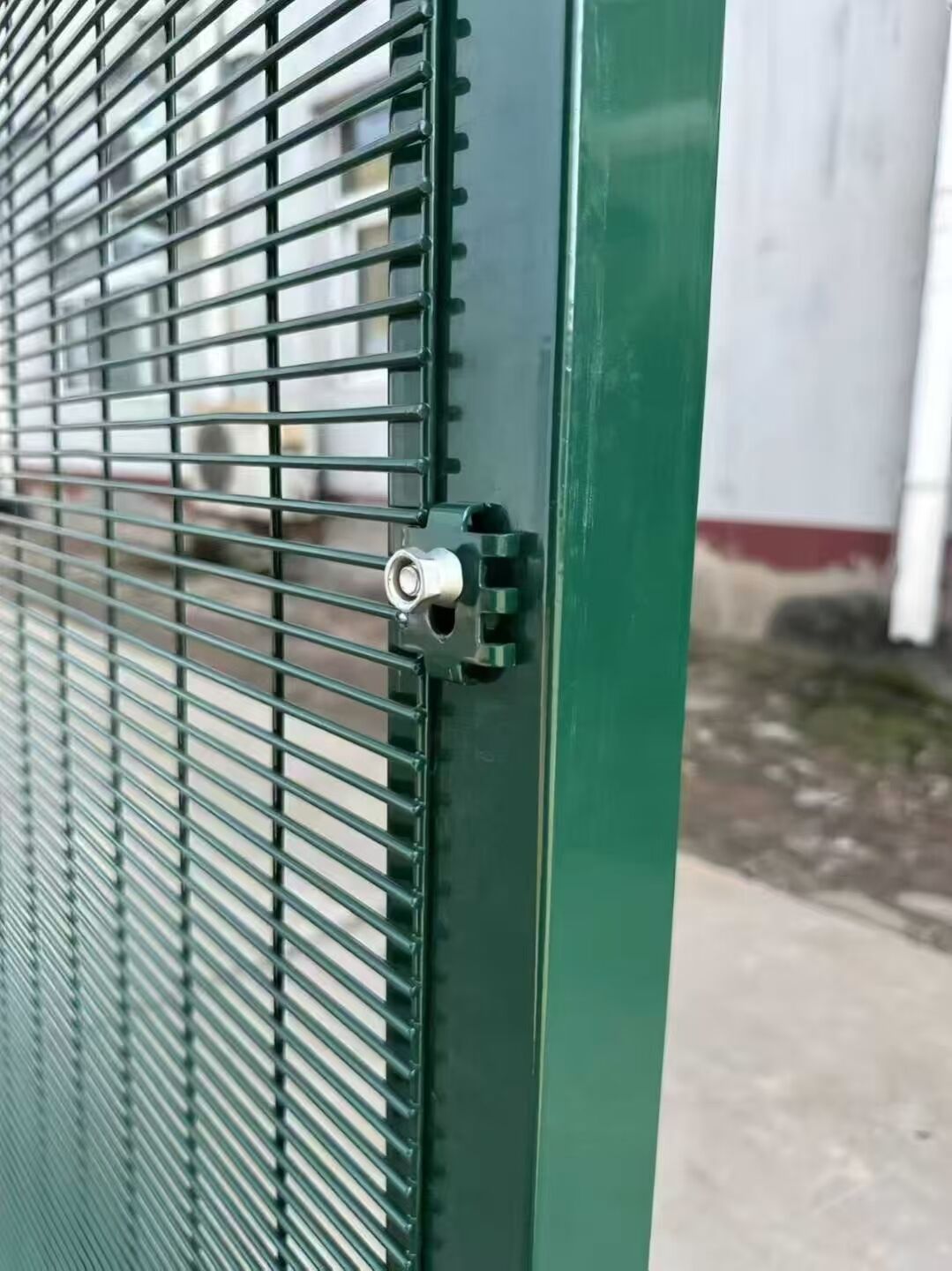
What is 358 mesh? Decoding the 3mm à 8mm aperture and heavy-duty wire gauge
What makes 358 mesh so effective? Let's look at the numbers behind it. The mesh has vertical openings measuring around 3mm and horizontal ones about 8mm wide. It's made from thick steel wire (about 4mm diameter) that's been welded at each crossing point. These welds are actually 1.5 times stronger than regular steel, which means there aren't those annoying weak spots we see in cheaper woven meshes. The small vertical gaps stop fingers from getting through or tools being inserted, something security folks really care about. And because of its rectangular pattern, when someone hits against it, the force spreads out across the whole surface instead of concentrating on one spot. Once installed properly, this mesh acts almost like a solid wall but still lets people see through clearly. That balance between seeing what's happening and keeping things secure is pretty hard to beat. Plus, the heavy gauge construction can handle massive pressure - over 4,500 pounds per square inch in testing. No way anyone could mess with it manually without serious equipment.
How 358 mesh compares to 347, 365, and standard welded wire in strength and tamper resistance
When it comes to keeping intruders out, 358 mesh stands head and shoulders above what most people consider good enough. Regular welded wire fencing has those big diamond shaped holes that are way over 50mm across, giving anyone something to grab onto. But 358's grid is just 3mm by 8mm, so there's nowhere for boots to find purchase and even bolt cutters struggle to get a grip. Take 347 mesh for instance, which has much bigger openings at 6mm by 19mm. Tests show that 358 cuts down on tool leverage problems by around 70-75%, thanks simply to how close together those vertical lines are spaced. And when compared to 365 mesh with its 5mm by 100mm gaps? Well, 358 wins hands down because of its thicker gauge wire and much tinier holes, making it about three times harder to cut through. The welding job on 358 is also consistently strong throughout, something regular chain link just can't match. Most folks need special equipment even to try breaking into this stuff. Combine all these factors - those tiny openings plus solid construction - and 358 becomes pretty much impossible to climb over, slice through, or force open in any practical way.
Core Security Advantages: Anti-Climb and Anti-Cut Performance
Small aperture and thick wires as physical barriers to cutting and tool insertion
The 358 mesh uses 3mm by 8mm openings combined with wire thickness between 4 and 6mm to build something pretty much impossible to get through physically. The size of these gaps stops bolt cutters from fitting inside, and there's no room for hydraulic jacks either, so nothing can really grip the material properly. Tests have shown that this mesh holds up against cutting tools for about 15 minutes straight, which is actually four times better than regular welded wire fencing manages. And since the steel has tensile strength above 1,200 N per square millimeter, most people trying to break in just give up after a while. Around 8 out of 10 would-be intruders walk away when faced with this kind of obstacle. What makes it work so well is how tightly packed everything is together with those tiny holes throughout the entire structure, creating what security experts call a first line of defense against anyone wanting to force their way in.
Vertical rigidity and lack of footholds that defeat climbing attempts
Vertical installation transforms 358 mesh into an effective anti-climb barrier thanks to its rigid construction and lack of horizontal bars that people could grab onto. Chain link fences and traditional ladder style designs just don't compare because the smooth surface of 358 creates no places for feet or hands to find purchase. The tightly stretched wires hold up against body weight without bending or breaking when someone tries to climb over. Many prisons and detention centers have seen their climbing attempts drop by around 90% after putting this mesh in place within about half a year. Several reasons explain why this works so well for security purposes.
- Zero toe-holds: Apertures reject shoe edges
- Surface deflection: Mesh rebounds when pushed
-
Angular resistance: 45°+ installation slope enhances slide effect
This design transforms perimeter barriers into climb-resistant surfaces, halting ascent attempts before they gain traction.
Proven Effectiveness in High-Security Applications
Case study: 92% reduction in prison breach attempts after 358 mesh installation (UK Ministry of Justice, 2022)
According to a study conducted by the UK Ministry of Justice in 2022 across 32 different prisons, there was an incredible reduction in security breaches after installing 358 mesh. Within just 18 months, the number of attempted escapes dropped by nearly 92%, going down from around 5 or 6 incidents each month to only about half an incident monthly. Why? Well, the mesh design plays a big role here. With those tiny 3mm by 8mm holes, it basically stops anyone from getting tools inside. Plus, the wires themselves are pretty thick at 6mm, so even when someone tries cutting them with heavy duty bolt cutters applying force exceeding 42 kilonewtons, they can't get through. Security staff have reported absolutely no successful climbing attempts either because there are no horizontal bars for feet placement and the vertical wires are packed really close together. During tests, this stuff held up against both sledgehammers and hydraulic jacks too. Based on all these observations, most experts agree that 358 mesh stands out as one of the best options available for securing areas where escape risks remain high.
Expanding use in critical infrastructure: Power plants, data centers, and transport hubs
The 358 mesh has become pretty much standard across the globe for protecting important infrastructure these days. Power stations install it around transformers and control panels to stop anyone messing with them, and data centers love how it keeps out unwanted hands from their server rooms. Transportation centers find it particularly useful against potential terrorist activities since it won't cut easily or let people climb through. Security managers are moving away from regular chain link fences or basic welded options because this mesh just works better. The numbers back it up too - most installations show failure rates well under 1%. Plus, the fact that nobody can see through it means fewer chances for bad actors to scope out targets. This makes all the difference at places where secrecy matters most, including nuclear power plants and major telecom switching points.
Maximizing ROI with Strategic 358 Mesh Installation
When installed correctly, 358 mesh becomes much more than just strong material it turns into something really tough to get through. Following proper engineering guidelines makes all the difference. For instance, making sure those tension wires are pulled tight at least 50 Newtons per square millimeter, keeping post spacing under 2.4 meters maximum, and digging foundation holes about a meter deep helps prevent problems like sagging or someone trying to lift the fence with leverage. The anti-lift bases combined with solid concrete footings basically remove any spots where someone could wedge tools underneath. All these steps create better security without breaking the bank. Most installers report that properly done installations cut down on maintenance expenses by around 40% over time.
Best practices: Proper tensioning, post spacing, and anti-lift base designs
Accurate tensioning removes slack that could be exploited by cutting tools, while optimal post spacing ensures structural integrity. Anti-lift designs anchor the mesh below frost lines, preventing jacking attempts.
Integration with smart security: Vibration sensors and AI-powered intrusion detection
When we combine 358 mesh technology with vibration sensors, we get real time threat detection capabilities. The accelerometers collect information that gets processed through machine learning systems. These systems can tell the difference between normal background noises and actual tampering attempts. As a result, false alarms drop around three quarters and response times pick up significantly. What makes this setup work so well is the combination of different layers working together. Physical security elements blend with digital monitoring solutions in ways that actually enhance each other's effectiveness. While there is upfront cost involved, most organizations find that these investments start paying off pretty quickly through reduced maintenance costs and fewer security incidents over time.
FAQ
What is the composition of 358 mesh?
358 mesh consists of steel wires approximately 4mm in diameter, welded together to form a grid with openings of about 3mm by 8mm.
How does 358 mesh compare to other types like 347 or 365 mesh?
358 mesh has smaller apertures and thicker wire gauge, providing greater resistance to cutting and climbing compared to 347 and 365 mesh, making it a more secure option.
What are the primary security features of 358 mesh?
The main security features include resistance to climbing due to lack of footholds, resistance to cutting with standard tools, and the distribution of force across its surface to prevent easy breaches.
Where is 358 mesh typically used?
It is commonly used in high-security areas such as prisons, data centers, power plants, and transportation hubs due to its robust design and effectiveness in preventing breaches.
Can 358 mesh be integrated with smart security systems?
Yes, 358 mesh can be integrated with technologies such as vibration sensors and AI-powered solutions for enhanced intrusion detection and reduced false alarms.