
 EN
EN
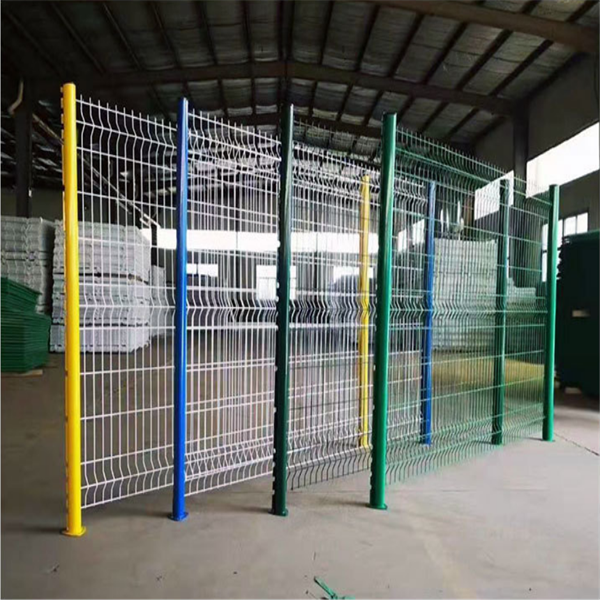
Structural Design Principles That Enhance Twin Wire Fence Stability
Dual horizontal and vertical wire configuration in twin wire mesh fence
Twin wire fences get their strength from two 8mm horizontal wires that hold together 6mm vertical wires in what looks like a tight grid pattern. The way these wires cross over each other creates something pretty strong against sideways forces, which makes them good for securing boundaries. When looking at fencing options, these double horizontal wires actually make the fence about 62 percent stiffer when twisted compared to regular single strand setups according to recent studies. But despite being stiffer, they still have enough give to handle impacts without breaking. This kind of balance between strength and flexibility is why many security professionals prefer this type of fencing nowadays.
Geometric arrangement and its role in increasing strength and rigidity
Orthogonal wire alignment creates uniform 65mm x 200mm apertures that act as structural micro-panels. This precision converts point loads into distributed stresses across adjacent wires, preventing localized failures. Flat installation further enhances stability by eliminating weak points found in V-bend configurations used in lower-grade fencing.
Uniform mesh spacing for balanced load distribution and reduced stress points
Consistent 65mm vertical spacing produces a self-reinforcing lattice that evenly transfers forces across the fence plane. Testing shows this standardization reduces stress concentrations by 41% compared to variable-spaced designs, significantly improving performance in high-wind and impact scenarios.
Comparison with single-wire systems: superior structural integrity of twin wire fencing
Field studies show twin wire systems withstand 2.3x more intrusion attempts than single-wire equivalents. The redundant horizontal wires prevent separation under tension, while thicker vertical members resist cutting tools more effectively—contributing to an 89% lower breach rate in secure facilities (Perimeter Protection Standards 2023).
Material Strength and Corrosion Resistance in Twin Wire Fence Systems
High-Tensile Steel Wires and Their Impact on Durability and Structural Performance
Twin wire fences use high-tensile steel wires rated at 47,000—60,000 PSI (ASTM A641-23), enabling the system to handle 2—3— greater loads than traditional chain link fencing. The dual-wire construction eliminates single points of failure, allowing the fence to maintain structural integrity under sustained tension or impact.
Galvanization and Protective Coatings That Extend the Lifespan of Twin Wire Fences
Hot-dip galvanized twin wire systems resist rust 35% longer than electroplated alternatives in coastal environments, according to a 2024 industry analysis. Enhanced protection comes from hybrid coatings—such as zinc-aluminum layers topped with polyester powder—that reduce corrosion rates to less than 0.3mm per decade in humid climates.
Resistance to Forced Entry Due to Robust Wire Mesh Design
The combination of 8mm horizontal and 6mm vertical wires creates an interlocked mesh with 8—12— greater shear resistance than standard chain link. It requires 14.5kN of force to breach—exceeding UL 325 standards for perimeter security—while maintaining gaps under 50mm to deter climbing.
Flat Installation vs. V-Bend: How Design Simplicity Improves Long-Term Stability
Advantages of flat installation for alignment and structural consistency
When panels are installed flat rather than curved, they stay perfectly level which prevents those annoying angular distortions we sometimes see with curved designs. Straight installation makes it easier for wiring too since everything runs in a straight line, keeping tension even throughout the whole system. According to some recent surveys done last year, fences that are properly aligned suffer about 34 percent fewer stress cracks at their joints compared to when they're built with bends. Plus there's another benefit nobody talks about much but techs love it the simplicity means inspections are straightforward work. Technicians can walk right up to the fence and visually check every panel without having to twist their heads around corners or anything like that.
Eliminating weak points by avoiding v-bend configurations
The V-bend design tends to form sharp corners where mechanical stress builds up, which can cut down on load capacity by around 40% right at those bend points according to research from Fencing Materials Lab back in 2022. Flat twin wire setups work differently though they spread out the impact force across the whole structure, so there's less chance of fatigue developing over time. When it comes to materials, standard flat panels actually save money because they don't waste anywhere near as much as those curved parts do about 6 to 8% less waste overall. Plus, these flat designs maintain the original thickness of the wires throughout. Another big plus is that flat installations keep moisture and dirt from collecting at those weak spots where most failures happen in traditional angled systems.
Post Installation Best Practices for Maximum Twin Wire Fence Support
Concrete Footings vs. Anchor Fasteners: Choosing the Right Support Method
When installing twin wire fences that need to handle more than 50 kN of sideways force, concrete footings really shine for stability. The trick is digging those posts down about a third to two fifths below ground level. But if the surface is solid stuff like asphalt or packed gravel, anchor fasteners work just fine and cut down on labor expenses by around 35% versus pouring concrete, according to industry data from last year. Just remember to make sure base plates stick out past the sides of each post by at least 20 centimeters or so. This helps spread out the pressure evenly across the ground, which prevents uneven settling over time.
Optimal Post Depth and Spacing Guidelines for Enhanced Stability
Spacing posts 2—2.5 meters apart results in less than 5 mm deflection under 900 N wind loads when buried to one-third of their total length. This ratio prevents harmonic vibration while optimizing material use. In high-traffic zones, reduce spacing to 1.8 meters and incorporate diagonal bracing for added rigidity.
Case Study: Causes and Consequences of Improper Twin Wire Fence Installation
A 2022 review of 120 failed installations found that 82% collapsed due to inadequate embedment depth. At one coastal site, 2.4-meter posts set in only 0.6-meter holes—with no compaction—led to complete failure within 18 months. Saltwater infiltration corroded anchor systems, highlighting the importance of proper installation depth and soil preparation.
When Anchors Are Sufficient vs. When Concrete Is Essential: A Practical Analysis
| Factor | Anchor Fasteners | Concrete Footings |
|---|---|---|
| Soil Type | Stable bedrock/compacted | Loose/sandy soils |
| Load Requirements | <30 kN lateral force | >30 kN lateral force |
| Frost Heave Risk | Low-risk regions | High frost line areas |
| Cost Efficiency | 40% cheaper installation | 60% longer lifespan |
Anchors are suitable for temporary setups (<5 years) with moderate security needs, while concrete is necessary for permanent barriers in seismic zones or areas exposed to wind gusts exceeding 130 km/h.
Environmental Load Resistance and Real-World Performance of Twin Wire Fencing
Performance Under Wind, Snow, and Seismic Conditions Due to Inherent Rigidity
Twin wire fences stand up pretty well against Mother Nature's toughest challenges. Wind tests show they can handle gusts as high as 90 mph according to those independent wind tunnel studies, and they hold their own when snow starts piling up at over 35 pounds per square foot. What makes these fences special is how the double wire setup works together during earthquakes. When the ground shakes, the wires actually spread out the force sideways so none of them bend or break individually. That's why folks living in places where quakes happen regularly should really consider this option. Another big plus is that these fences cut down on what's called the wind sail effect by around two thirds compared to regular chain link fences. This means they stay aligned even through major storms without needing constant adjustments or repairs after bad weather hits.
Long-Term Durability Data From Coastal and Industrial Environments
Galvanized twin wire fences retained 92% structural integrity after 25 years in accelerated salt-spray testing (ASTM B117-23). In industrial settings, they show less than 0.5mm metal loss per decade despite exposure to chemical pollutants and extreme temperatures (-40°F to 120°F). Field performance data includes:
| Environment | Avg. Lifespan | Maintenance Cost Reduction |
|---|---|---|
| Coastal | 28—32 years | 41% vs. powder-coated steel |
| Heavy Industrial | 22—25 years | 37% vs. welded wire mesh |
The uniform zinc-iron alloy coating (150—300 g/m²) forms a self-healing barrier that stops rust propagation at wire intersections—addressing a key failure mode in single-wire systems.
FAQ
What makes twin wire fences more stable than single-wire fences?
Twin wire fences have dual horizontal wires and thicker vertical wires, providing better resistance against intrusion and cutting tools than single-wire systems.
How does flat installation increase fence stability?
Flat installation eliminates angular distortions and evenly distributes tension, reducing stress cracks and making inspections more straightforward.
When should I choose concrete footings over anchor fasteners?
Concrete footings are recommended for areas with unstable soil, high frost heave risk, and for permanent barriers needing to withstand high lateral forces.
What are the best materials for enhancing twin wire fence durability?
High-tensile steel wires and hot-dip galvanization with hybrid coatings are best for preventing rust and enhancing longevity in harsh environments.
Table of Contents
-
Structural Design Principles That Enhance Twin Wire Fence Stability
- Dual horizontal and vertical wire configuration in twin wire mesh fence
- Geometric arrangement and its role in increasing strength and rigidity
- Uniform mesh spacing for balanced load distribution and reduced stress points
- Comparison with single-wire systems: superior structural integrity of twin wire fencing
- Material Strength and Corrosion Resistance in Twin Wire Fence Systems
- Flat Installation vs. V-Bend: How Design Simplicity Improves Long-Term Stability
- Post Installation Best Practices for Maximum Twin Wire Fence Support
- Concrete Footings vs. Anchor Fasteners: Choosing the Right Support Method
- Optimal Post Depth and Spacing Guidelines for Enhanced Stability
- Case Study: Causes and Consequences of Improper Twin Wire Fence Installation
- When Anchors Are Sufficient vs. When Concrete Is Essential: A Practical Analysis
- Environmental Load Resistance and Real-World Performance of Twin Wire Fencing
- FAQ