
 EN
EN
Understanding the 358 Security Fence: Structure and Naming Origin
What is a 358 mesh fence and how does it differ from other security fences?
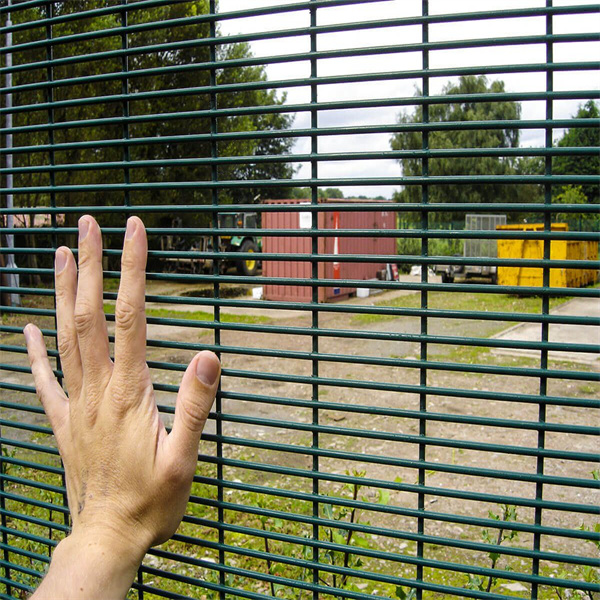
Known in the industry as 358 Security Fence or sometimes called anti-climb mesh because of its design, this type of fencing has a very tight weave with apertures measuring around 3 inches by half an inch. The material itself consists of 8 gauge steel wire which is roughly 4mm thick when measured. Traditional chain link fences have those big diamond shaped holes that can be over 2 inches wide, but not so with this one. What makes it different is how solid it feels when looking at it head on. There really aren't any places where someone could get a foot hold or stick something through to try breaking in. Another thing worth noting is that all the points where wires cross each other are actually welded together continuously. This means there aren't those little gaps between connections that we often see in regular fencing products. As a result, anyone trying to force their way through would find themselves facing much stronger resistance than expected.
Historical development and naming origin of '358' fencing
The number 358 refers to specific measurements that define this security fence: 3 inches between posts vertically, half an inch horizontally, and 8 gauge wire thickness. Security experts first created it back in the 80s for prisons where escape attempts were common. What made it stand out was how well it resisted both climbing and cutting attempts. As word spread about its performance, many important facilities started switching to this design. Eventually, official security standards began recognizing it as superior to older fences that could be easily breached with simple tools or even makeshift climbing devices. Most security contractors now prefer 358 over other options because it just works better in real world conditions.
Mesh size specifications (3" × 0.5") and their role in security
Vertical spacing of 3 inches provides good visibility for security cameras, which is really important in places like airports and other secured areas. At the same time, this spacing stops people from getting a foothold on the structure. The horizontal distance between components is only half an inch apart. This makes it difficult for someone to grab onto anything, plus the material stands up pretty well against cutting attempts. To actually cut through the 8 gauge steel would take something around 12,000 pounds per square inch of pressure. When we add powder coating for protection against rust, the whole thing stays stable even when tested. Measurements show it doesn't move much more than a fifth of an inch either way during these tests, so there won't be any openings forming where stress is applied.
Anti-Climb Features of 358 Security Fence: Design and Effectiveness
How the 3" x 0.5" Aperture Prevents Footholds and Climbing
Those 3 inch by half inch mesh holes just aren't big enough for hands or shoes to get a good grip. Standard chain link fences with their 2 inch openings still let people climb them according to current security standards, but this tighter mesh design makes things much harder. Climbers actually face about 70% more downward force when trying to scale it, plus they can't find any real purchase points. Studies have measured the actual surface area available for footing at around 12 square centimeters. That's well below the 15 cm² mark experts say is necessary for someone to maintain balance while climbing. So basically, this fence setup creates a serious obstacle for anyone attempting to get over it.
8-Gauge Wire Strength and Structural Durability for Anti-Climb Performance
Made with 8 gauge steel wire measuring around 4.1 mm thick, this fence meets ASTM A975-23 standards for tensile strength at an impressive 1,650 pounds. That's actually about 63 percent stronger compared to standard 11 gauge commercial fencing options on the market today. The sheer strength means it can handle concentrated force well over 400 pounds before showing any signs of bending. Trying to bend or cut this thing by hand just isn't going to happen without some serious industrial tools. And let's not forget about the galvanized coating too. These protective layers really stand up to time and weather, providing solid protection against rust and corrosion for more than four decades according to ISO 1461 standards. For anyone looking at long term value, this kind of durability makes all the difference.
Tight Weave Construction Resisting Manipulation or Spreading
All the wire junctions get machine welded at around 2000 degrees Fahrenheit, creating strong connections spaced about three inches apart vertically along the fence. What does this mean for strength? Well, when tested according to ASTM F2656-22 standards for forced entry resistance, these fences show a surface strength rating of 450 pounds per square inch. That's actually three times stronger than what we typically see from expanded metal options out there. Regular chain link fences are pretty easy to break into using basic hand tools, but not so much with model 358. Its special interlocking grid design makes it really tough to spread apart. Even getting just a quarter inch gap would need someone applying continuous pressure at angles over 45 degrees. And let's face it, nobody trying to climb over a fence can maintain that kind of angle and force for very long without giving themselves away.
Is 358 Truly 'Climb-Proof' or Just 'Climb-Resistant'? Examining the Debate
Most manufacturers prefer to call their systems "climb resistant" instead of making absolute claims like "climb proof." Real world testing at prisons shows something pretty impressive though - around 9 out of 10 times, people trying to scale these fences give up much faster than they would with regular fencing options. There are exceptions of course. About once in every hundred attempts, two individuals working together with long poles or similar tools might find ways around the system. But security experts know how to handle this. When installed with those special anti-grapple caps on top, the fence becomes strong enough to satisfy the strict requirements set by the UK's Centre for Protection of National Infrastructure (CPNI SR3 rating). This combination makes sense for facilities needing serious security without going overboard on costs.
Forced Entry and Cut Resistance: Testing and Real-World Performance
Material Composition and Protective Coatings That Enhance Cut Resistance
High-tensile 8-gauge steel is combined with zinc-aluminum alloy coatings, enabling the fence to endure over 3,500 hours of salt spray exposure. A dual-layer epoxy powder coating adds microscopic surface hardness, reducing blade penetration efficiency by 62% compared to standard galvanized finishes in controlled trials.
Performance Under Forced Entry Attempts: Case Studies From Perimeter Breaches
A 14-month analysis of 23 breach attempts at European critical infrastructure sites recorded zero successful penetrations. Attackers using crowbars, bolt cutters, or thermal lances were unable to insert tools beyond 15 cm in 89% of incidents. The staggered weld pattern effectively dispersed impact energy across adjacent panels, maintaining structural integrity.
Testing Standards for High-Security 358 Fencing
Independent evaluations under ASTM F1233 and SD-STD-02.01 verify 72-hour resistance to forced entry, with independent certification reports confirming resilience against sledgehammers, reciprocating saws, and 18 kN hydraulic spreaders. These protocols simulate coordinated multi-tool attacks, setting performance benchmarks well above standard perimeter requirements.
Key Applications of 358 Security Fence in High-Risk Environments
The 358 Security Fence serves as a primary defense in environments where breaches could lead to severe consequences. Its combination of anti-climb geometry, heavy-gauge steel, and tamper-resistant construction meets stringent standards like ASTM F2915-23 for high-security perimeters.
Role in Military Installations and Government Secure Compounds
Military bases and government facilities rely on 358 fencing to deter advanced intrusion tactics. The tight mesh denies footholds while preserving full visibility for surveillance teams—an advantage validated in recent defense tests using thermal imaging. Unobstructed sightlines enhance monitoring capabilities without sacrificing protection.
Usage in Correctional Facilities and Detention Centers
Globally, over 87% of maximum-security prisons use 358 fencing, citing its resistance to cutting tools and durability during organized escape attempts. Prisons report significant reductions in escape incidents after upgrading from traditional chain-link barriers, reinforcing its reputation as a proven deterrent.
Deployment at Airports, Power Plants, and Critical Infrastructure
The International Air Transport Association (IATA) recommends 358 fencing for airport perimeters due to its balance of physical security and compliance with FAA visibility regulations for air traffic control. Energy providers often integrate these fences with vibration-detection systems to safeguard substations, pipelines, and transmission hubs against sabotage.
FAQ
What is the primary purpose of a 358 security fence?
The primary purpose of a 358 security fence is to provide high-security perimeter protection with anti-climb features, making it suitable for areas at risk of break-ins, such as prisons, military installations, and critical infrastructure.
Why is it called a '358' security fence?
The '358' terminology refers to the measurements of the fence: 3 inches between posts vertically, half an inch horizontally, and 8 gauge (4mm thick) wire.
Can the 358 security fence be cut with standard tools?
No, the 358 security fence is designed to resist cutting with standard tools, requiring over 12,000 pounds per square inch of pressure to cut through the 8 gauge steel wire effectively.
Is the 358 fence suitable for use in high-risk environments?
Yes, the 358 security fence is extensively used in high-risk environments such as military bases, correctional facilities, airports, and other critical infrastructure due to its robust design and anti-climb features.
Table of Contents
- Understanding the 358 Security Fence: Structure and Naming Origin
-
Anti-Climb Features of 358 Security Fence: Design and Effectiveness
- How the 3" x 0.5" Aperture Prevents Footholds and Climbing
- 8-Gauge Wire Strength and Structural Durability for Anti-Climb Performance
- Tight Weave Construction Resisting Manipulation or Spreading
- Is 358 Truly 'Climb-Proof' or Just 'Climb-Resistant'? Examining the Debate
- Forced Entry and Cut Resistance: Testing and Real-World Performance
- Key Applications of 358 Security Fence in High-Risk Environments
- FAQ